Hand surgery
Conditions treated in the hand
Hand surgery covers injury and conditions that develop over time. The aim is use of the hand: movement, feeling and strength. These notes are general. What is suitable for you is decided at consultation.
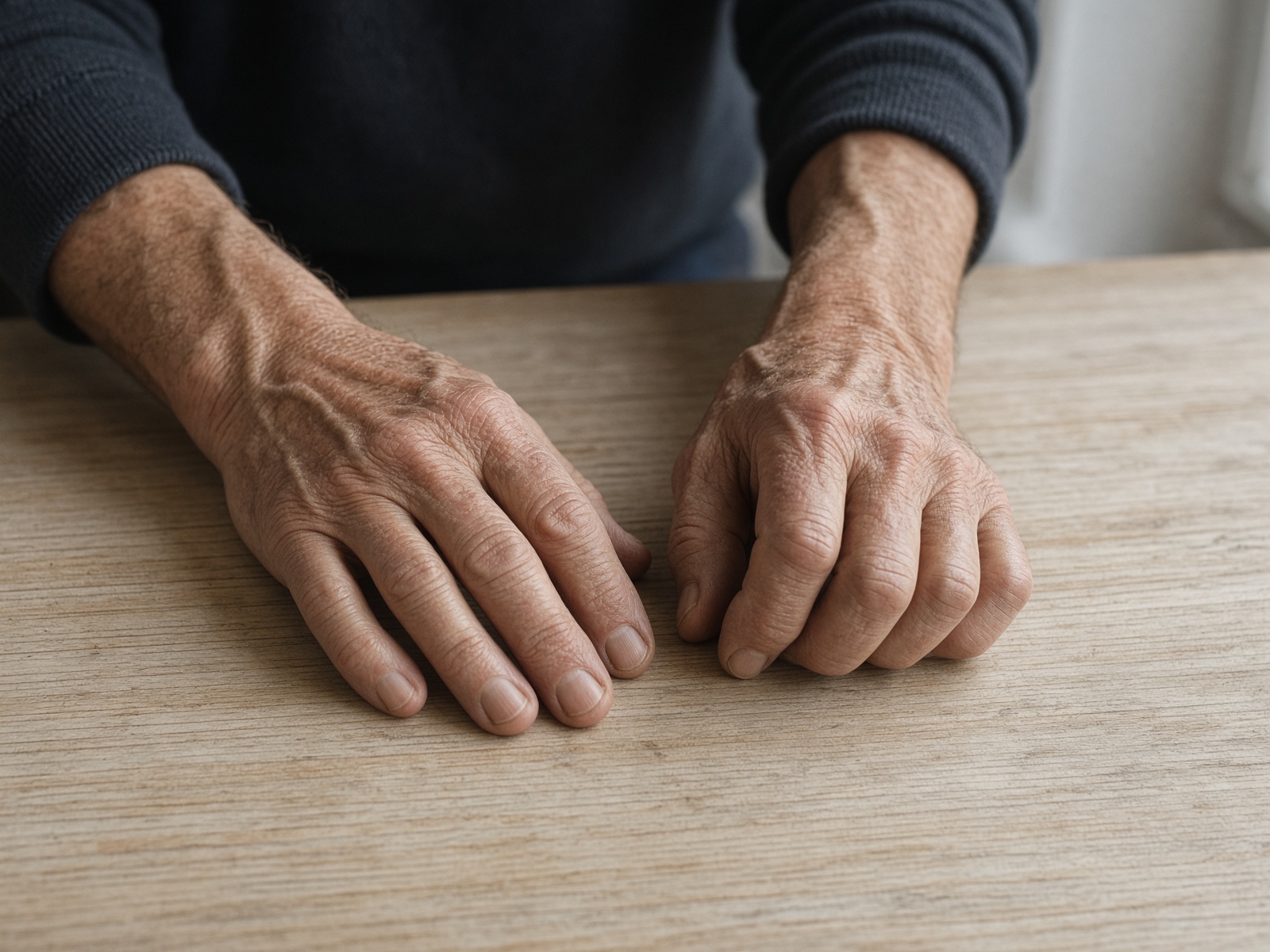
Photographs for anatomical context. Not a patient of this practice, and not a surgical result.
Hand injuries and soft tissue lacerations
Cuts, crush injuries and wounds are assessed for damage to skin, tendon, nerve, blood vessel and joint. Some are cleaned and closed. Others need exploration in theatre. Timing depends on the injury, and on whether deeper structures are involved.
Fingertip and nail bed injuries
The tip of the finger and the nail bed are often injured together. Care may be a dressing, repair of the nail bed, or replacement of missing skin. Feeling in the fingertip, and the later shape of the nail, are part of the plan.
Fractures of the hand and wrist
Some broken bones in the hand and wrist heal in a splint or cast. Others need an operation to hold the bone in place while it heals. The plan depends on which bone is broken and whether the pieces have shifted.
Tendon injuries
Tendons bend and straighten the fingers. A cut tendon does not reliably heal back to a working length on its own. Repair is usually done in theatre, then protected in a splint, with hand therapy to follow.
Trigger finger
A finger or thumb that catches or locks is often the tendon catching as it enters its sheath. A splint or an injection may be tried. If catching continues, a short operation can release the tight opening of the sheath.
Nerve injuries and nerve decompressions
A cut nerve can be repaired. A nerve that is trapped can be released where it is compressed. How feeling and movement return is discussed at consultation.
Carpal tunnel
Carpal tunnel is pressure on a nerve at the wrist. It often causes numbness and tingling in the thumb, index and middle fingers. A splint is sometimes enough. If symptoms continue, the nerve can be released at an operation.
Cubital tunnel
The ulnar nerve can be compressed at the elbow. Numbness in the ring and little fingers, and weakness of the hand, may follow. If symptoms persist, the nerve can be released at the elbow, and sometimes moved to a new position.
Ganglions of the fingers and wrist
A ganglion is a fluid filled lump from a joint or a tendon sheath. Many cause no trouble and can be left. If a lump is painful or gets in the way, it can be removed. A ganglion can come back.
Mucous cysts
A mucous cyst is a small ganglion beside the end joint of a finger, often over an arthritic joint. It can thin the skin or mark the nail. If it is troublesome it can be removed, sometimes with the bone spur beneath it.
Dupuytren's contracture
Thickening in the palm can form a cord that bends one or more fingers toward the palm. Treatment is considered when that bend gets in the way of use. It may be a needle procedure, an injection, or an operation to divide or remove the cord. The condition can return.
De Quervain's tenosynovitis
Pain on the thumb side of the wrist comes from irritation where the tendons that lift the thumb pass through a sheath. A splint or an injection is often tried first. If pain continues, that sheath can be released.
Arthritis of the hand and thumb
Worn joints in the fingers, or at the base of the thumb, can be painful and stiff. A splint, therapy or an injection is often used first. When an operation is suitable, it may stiffen a joint, replace it, or remove a worn bone at the base of the thumb.
Skin cancers
A skin cancer on the hand is removed with a margin of healthy tissue. The wound may be closed directly, with a graft, or with nearby skin moved into the gap. Clearance of the cancer is planned before appearance.
Call to book
A consultation is the place to match a concern to a treatment. Call to book, or send an enquiry.